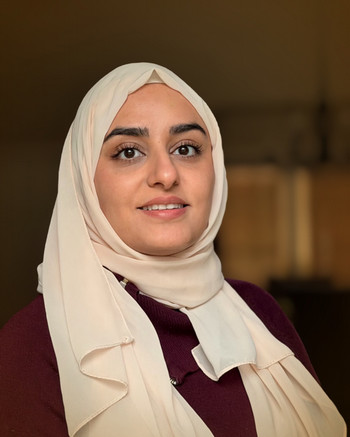
TRDRP Trainee Spotlight: Dr. Sarah Alnahari
Sarah Alnahari, PhD | Lecturer in Public Health & Director of PH 196: Internships in the Community
UC Merced
“What we often call ‘culture’ is shaped by policies, marketing, and access — and when we look behind the curtain, we see opportunities to support communities rather than blame them.” – Sarah Alnahari
Background and Inspiration
Growing up in Yemen, smoking was woven into daily life. It was everywhere — in social spaces, family gatherings, and community routines — so common it often went unnoticed. When she moved to California, the contrast was striking. Smoking was no longer embedded in everyday public life, revealing just how much environments and policies shape behavior.
Within Arab American communities, however, many of the smoking practices she grew up with persisted. At first, they felt cultural and inevitable. But as she became involved in tobacco control research, she began to see what was happening “behind the curtain” — targeted marketing, policy gaps, limited access to cessation support, and structural factors that made certain products acceptable and accessible. Her perspective shifted from judgment to understanding.
Her motivation is also deeply personal. Her grandfather lived with heart disease and diabetes after smoking for the first 30 years of his life. Even after quitting, the long-term health effects remained. Seeing the impact of tobacco over time strengthened her commitment to prevention and cessation — especially in communities where products like hookah are widely accepted and the harms may feel distant or minimized.
Research That Resonates
As an early-career public health researcher, she focuses on tobacco use, nicotine dependence, and cessation inequities among Arab American and other underrepresented populations in California. Her work integrates survey data, qualitative interviews, and community-engaged methods to better understand why tobacco use persists — and how to support meaningful change.
One of the central gaps she addresses is the tendency to describe tobacco use in Arab American communities as simply “cultural.” Her research demonstrates that this explanation is incomplete and misleading. Many individuals recognize the harms of tobacco and want to quit, but face stress, social pressures, limited culturally relevant cessation services, and policy environments that do not adequately address products like hookah. Unlike cigarettes, hookah is often used in public social settings and homes, and policies have not been as effective in curbing its normalization.
TRDRP support was foundational in advancing this work. Because Arab Americans are often excluded from surveillance data systems, her research required intentional design and community partnerships to generate meaningful data. TRDRP funding not only made this research possible, but affirmed that equity-focused, community-engaged tobacco research matters. With this support, she has been able to translate findings into practical guidance for local health departments, statewide tobacco control efforts, and community organizations across California.
By shifting the focus from “culture” to context, her work helps California Tobacco Control partners design prevention and cessation strategies that are more responsive, relevant, and effective. Ultimately, this benefits current and former tobacco users by improving how services are delivered and how communities are supported.
Advice for Aspiring Researchers in Tobacco Control and Prevention
Her advice is simple but powerful:
- Listen before you design. Community voices should shape research questions, not the other way around.
- Understand policy — but stay grounded in lived experience. Tobacco use is influenced by both structural forces and everyday realities.
- Work across disciplines and sectors. Collaboration with public health agencies, community leaders, and policymakers strengthens impact.
- Value translation as much as publication. Research should inform practice and policy in accessible ways.
- Seek funders and mentors who prioritize equity. Support from organizations like TRDRP can shape not just a project, but an entire career trajectory.
Above all, she hopes to change the rhetoric that tobacco use is inherently cultural within Arab American communities. Through education, increased awareness about products like hookah, and stronger advocacy, she wants communities to feel informed and empowered — not trapped by assumptions or structural barriers.
Publication:
Sarah Alnahari, Vera Inoue Terris, Lina Salam, Gamila Abdelhalim, Juliet P Lee, From Invisibility to Action: Tobacco Control Research for Arab Americans in the New Middle Eastern/North African Ethnic Category, Nicotine & Tobacco Research, Volume 28, Issue 1, January 2026, Pages 184–187, https://doi.org/10.1093/ntr/ntaf161
Tobacco-Related Disease Research Program. (n.d.). Hookah, shisha and waterpipe tobacco: Consequences for health and future research directions. https://trdrp.org/news-events/hookah.html